

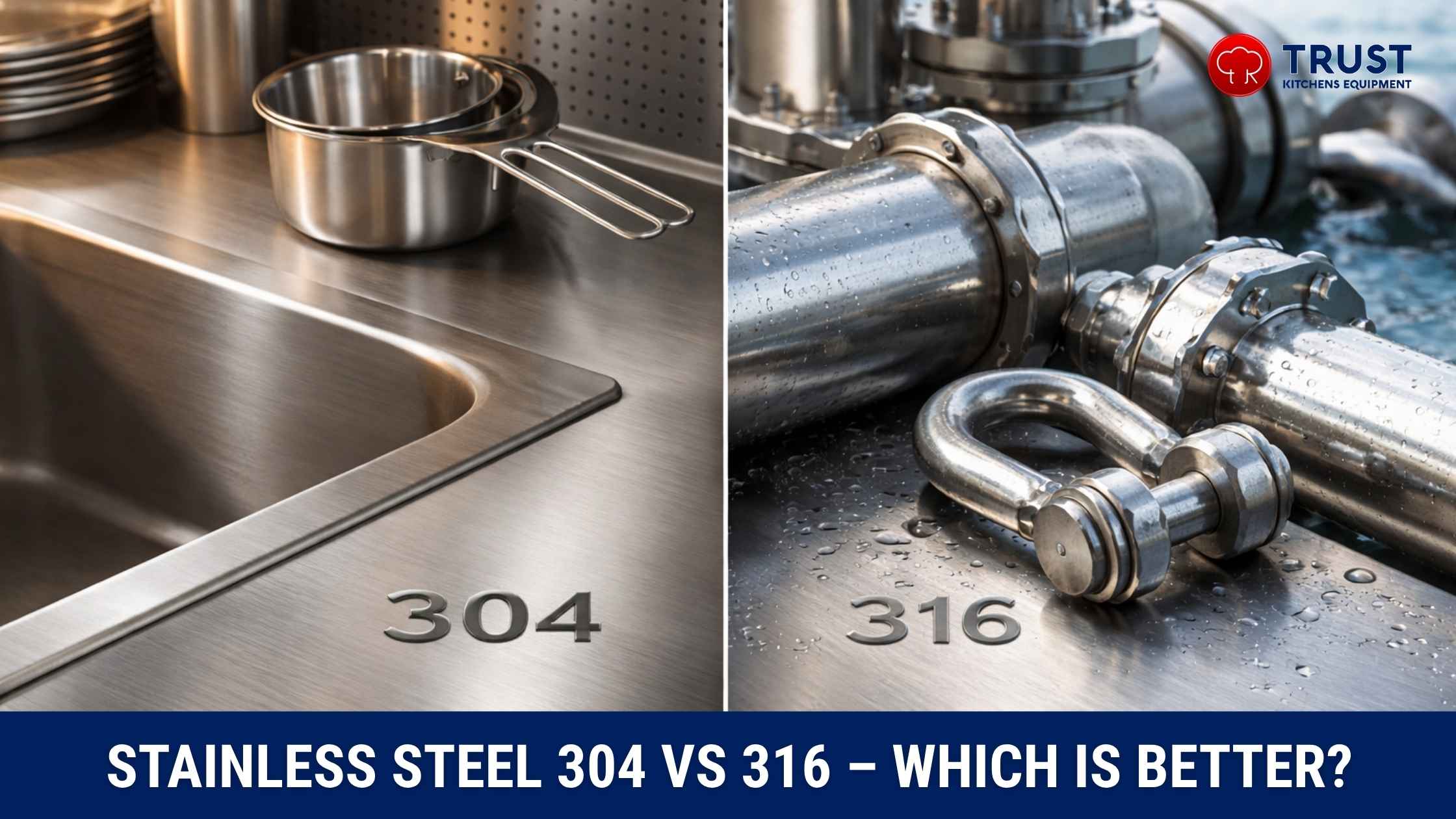
When evaluating stainless steel 304 vs 316, the better option depends primarily on the environment and intended application. Stainless steel 304 is widely used for kitchen equipment due to its durability and cost efficiency, while stainless steel 316 offers superior corrosion resistance, especially in harsh or marine environments. Choosing between them requires understanding composition, durability, and cost differences.
For restaurants, bakeries, hotels, and hospitality businesses across the UAE, selecting the right stainless steel is essential for hygiene, longevity, and operational efficiency. Trust Kitchens Equipment Trading, headquartered in Musaffah Industrial Area in Abu Dhabi, supplies commercial kitchen equipment and stainless-steel installations for hospitality businesses and homeowners across the UAE. With years of experience supporting restaurants, food trucks, cafés, and institutional kitchens, the company helps clients make informed decisions when selecting stainless steel for kitchen infrastructure and equipment.
What is stainless steel and why is it used in kitchens?
Stainless steel is an iron-based alloy that contains chromium, which forms a protective oxide layer preventing rust and corrosion. Because of its hygienic surface, durability, and ease of cleaning, stainless steel has become the global standard for professional kitchens.
In the UAE hospitality sector, stainless steel is particularly important because kitchen environments involve moisture, heat, cleaning chemicals, and continuous use. These factors require materials that maintain hygiene and structural integrity for years.
- Excellent hygiene and easy sanitization
- Strong structural integrity for heavy-duty equipment
- Resistance to rust and corrosion
- Compliance with food safety regulations
- Long operational lifespan
This is why suppliers like Trust Kitchens Equipment Trading emphasize food grade stainless steel uae standards when supplying equipment to restaurants and commercial kitchens.
What are the main differences in stainless steel 304 vs 316?
The primary difference between stainless steel 304 and 316 lies in their chemical composition and resistance to corrosion. Stainless steel 316 contains molybdenum, an element that significantly improves resistance to chlorides and harsh environments.
| Feature | Stainless Steel 304 | Stainless Steel 316 |
| Chromium Content | 18–20% | 16–18% |
| Nickel Content | 8–10.5% | 10–14% |
| Molybdenum | Not present | 2–3% |
| Corrosion Resistance | High | Very high |
| Typical Applications | Kitchen equipment | Marine environments |
This table highlights the key elements behind the corrosion resistance comparison that influences stainless steel selection in professional kitchens and industrial applications.
What are the ss 304 properties?
Understanding ss 304 properties helps explain why this grade is the most commonly used stainless steel in commercial kitchens worldwide.
- Excellent corrosion resistance in normal environments
- Strong mechanical strength
- High temperature tolerance
- Non-reactive surface suitable for food preparation
- Relatively affordable compared to higher alloy grades
Because of these advantages, SS 304 is frequently used for:
- Commercial kitchen countertops
- Preparation tables
- Commercial sinks
- Exhaust hoods
- Kitchen shelving and storage units
Most restaurant kitchens across the UAE rely on this grade because it meets hygiene standards while remaining cost-effective. Trust Kitchens Equipment Trading frequently recommends SS 304 for restaurant kitchens, cafés, and bakeries where durability and food safety are priorities.
What are the ss 316 properties?
While SS 304 works well for most kitchens, certain environments require the enhanced durability of stainless steel 316. The unique ss 316 properties come primarily from the addition of molybdenum.
- Exceptional corrosion resistance
- High resistance to salt and chloride exposure
- Better performance in harsh chemical environments
- Improved resistance to pitting corrosion
- Extended lifespan in extreme conditions
These properties make stainless steel 316 particularly valuable in coastal regions or marine applications. For example, kitchens located near the sea may experience exposure to salty air, making marine grade stainless steel uae installations more appropriate.
Which stainless steel is better for commercial kitchens?
For most restaurants and hospitality businesses, stainless steel 304 is sufficient because it balances durability and cost. However, stainless steel 316 is recommended in environments where exposure to salt, harsh cleaning chemicals, or humidity is frequent.
When evaluating stainless steel durability commercial kitchen, several factors should be considered:
- Level of moisture exposure
- Cleaning chemicals used in sanitation
- Temperature fluctuations
- Kitchen traffic and workload
- Proximity to coastal environments
Professional suppliers like Trust Kitchens Equipment Trading assess these conditions before recommending materials for stainless steel kitchen installations.
What is the stainless steel price difference?
The stainless steel price difference between 304 and 316 is primarily due to the additional molybdenum and higher nickel content present in SS 316. As a result, stainless steel 316 typically costs between 20% and 40% more than stainless steel 304.
While SS 316 has a higher upfront cost, it may deliver long-term savings in environments where corrosion risks are high. For most commercial kitchens, however, stainless steel 304 provides the ideal balance of performance and affordability.
This is why equipment suppliers often evaluate kitchen requirements before recommending a material grade.
How to choose the right steel for your kitchen setup?
Selecting the correct stainless steel requires evaluating operational requirements, environmental exposure, and budget considerations. A proper steel selection guide kitchen typically involves analyzing the following factors:
- Kitchen location and environmental exposure
- Frequency of equipment usage
- Sanitation chemicals used
- Budget constraints
- Expected equipment lifespan
For restaurants launching new kitchens, choosing the right stainless steel grade ensures compliance with hygiene standards and reduces long-term maintenance costs.
Applications of stainless steel in UAE hospitality kitchens
Across the UAE hospitality sector, stainless steel is used extensively in kitchen construction and equipment manufacturing. Commercial kitchens require materials that meet both safety regulations and operational durability.
Common stainless steel applications include:
- Commercial cooking stations
- Restaurant preparation counters
- Bakery equipment and racks
- Industrial sinks and dishwashing stations
- Ventilation hoods and ducting systems
Trust Kitchens Equipment Trading supplies a wide range of stainless steel kitchen systems designed to meet the needs of restaurants, cafés, hotels, and food trucks across the UAE.
About Trust Kitchens Equipment Trading
Trust Kitchens Equipment Trading is a commercial kitchen equipment supplier headquartered in Musaffah Industrial Area, Abu Dhabi, UAE. Established in 2016, the company provides professional kitchen solutions for restaurants, cafés, bakeries, food trucks, hotels, and home kitchens across the UAE.
The company specializes in stainless steel kitchen setups, commercial appliances, bakery equipment, and hospitality-industry kitchenware. By combining high-quality equipment with transparent pricing and reliable customer support, Trust Kitchens Equipment Trading helps entrepreneurs and hospitality businesses build kitchens that meet professional standards.
Through its online storefront and UAE-wide distribution network, the company enables businesses to access durable kitchen equipment and stainless steel solutions that support efficient and hygienic food preparation environments.

 Home
Home
 Categories
 Orders
 Wishlist
 Profile
