

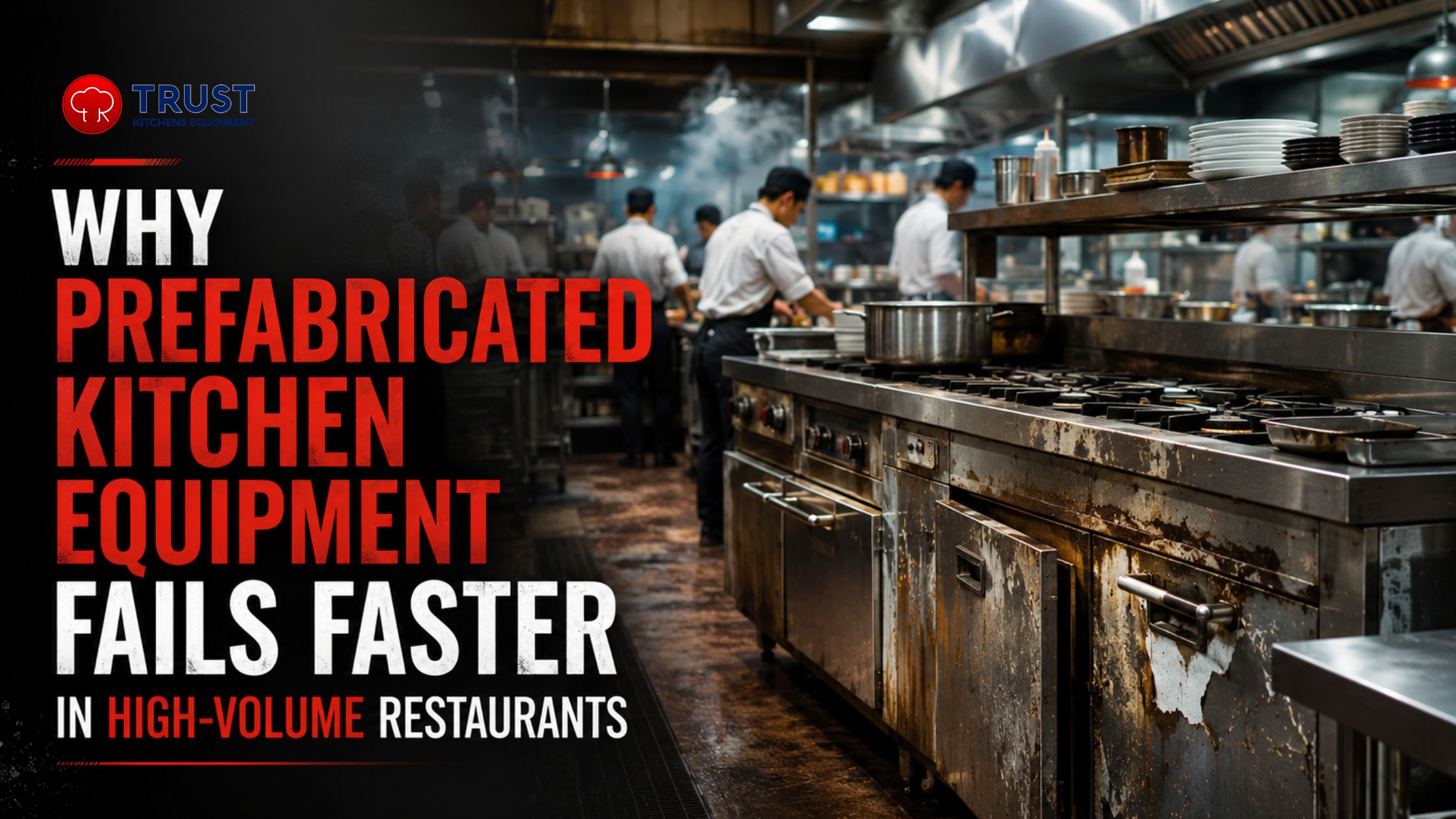
Prefabricated kitchen equipment often fails faster in high-volume restaurants due to a combination of material limitations, build quality issues, and insufficient tailoring to operational demands. Understanding these causes—including common prefabricated kitchen equipment problems, the impact of low-grade stainless steel kitchen units, and the nuances of SS430 vs SS304—is crucial for business owners. Trust Kitchens Equipment Trading, based in Abu Dhabi, UAE, specializes in supplying robust, professional-grade kitchen equipment that addresses these challenges.
What Are The Main Reasons Prefabricated Kitchen Equipment Fails In Busy Restaurants?
Prefabricated kitchen equipment is designed for quick installation but often lacks the durability needed for high-volume restaurant use. The main causes of premature failure include subpar materials, poor design fit, and inadequate resistance to intensive daily operations. Below, we explore these issues in detail.
- Use of low-grade materials, especially in stainless steel components
- Generic design that doesn’t match the workflow or space constraints of professional kitchens
- Lack of reinforcement for heavy-duty, continuous use
- Poor after-sales support and limited customization options
How Do Prefabricated Kitchen Equipment Problems Manifest In High-Volume Environments?
Prefabricated kitchen equipment problems typically become evident under the relentless pace of a busy restaurant. Frequent breakdowns, rusting, and malfunctions disrupt service and pose safety risks. These problems often stem from the use of inadequate or mismatched equipment.
- Doors and hinges loosening or failing due to repetitive use
- Warping or denting of surfaces from heavy pots and frequent cleaning
- Rust spots emerging on supposedly “stainless” units, especially near seams and welds
- Electrical and gas malfunctions in appliances not designed for commercial intensity
These failures lead to expensive repairs, food wastage, and potential health code violations—significantly impacting a restaurant’s reputation and bottom line.
Why Are Low-Grade Stainless Steel Kitchen Units A Risk For Commercial Kitchens?
Low-grade stainless steel kitchen units are particularly problematic in the UAE’s demanding restaurant sector. While stainless steel is prized for its hygiene and durability, not all grades are equal. Many prefabricated units use lower-grade steels to cut costs, but this results in faster wear and more frequent replacements.
| Feature | SS430 | SS304 |
|---|---|---|
| Chromium Content | 16–18% | 18–20% + 8–10.5% Nickel |
| Corrosion Resistance | Moderate, vulnerable to rust in humid environments | High, suitable for wet and acidic conditions |
| Cost | Less expensive | More expensive |
| Lifespan in High-Volume Kitchens | Shorter, especially with frequent cleaning/usage | Longer, resists wear and tear |
Trust Kitchens Equipment Trading offers a wide selection of SS304-grade stainless steel solutions designed for the UAE market, ensuring better hygiene and longevity than low-grade alternatives.
What Is The Impact Of SS430 Vs SS304 On Restaurant Kitchen Durability Issues?
The SS430 vs SS304 debate is central to restaurant kitchen durability issues. SS430, often used in cheaper prefabricated units, is more prone to corrosion and mechanical failure under intensive use. SS304, with higher nickel content, provides superior resistance and is the preferred choice for high-traffic kitchens.
- SS304 maintains a polished finish, even after repeated cleaning with harsh chemicals
- SS430 units may develop pitting, discoloration, or even holes over time
- Equipment made from SS304 is less likely to harbor bacteria due to better surface integrity
For restaurants in Abu Dhabi and across the UAE, where humidity and cleaning frequencies are high, opting for SS304 is an investment in long-term reliability and food safety.
How Can Trust Kitchens Equipment Trading Help Avoid These Issues?
Trust Kitchens Equipment Trading, headquartered in Musaffah Industrial Area, Abu Dhabi, is a specialist in supplying heavy-duty, commercial-grade kitchen equipment. By focusing on high-quality materials and tailored solutions, we help restaurants, cafés, and food-service ventures across the UAE avoid common prefabricated kitchen equipment problems.
Our Unique Approach Includes:
- Supplying only premium stainless steel (SS304) for critical kitchen units
- Offering custom fabrication to suit unique workflows and space limitations
- Providing after-sales support and guidance on maintenance best practices
- Transparent pricing, fast delivery, and reliable customer support via our online storefront
Our mission is to empower UAE’s food-service entrepreneurs with resilient, hygienic, and cost-effective kitchen solutions that stand the test of time.
What Are The Costs And Risks Associated With Restaurant Kitchen Durability Issues?
Restaurant kitchen durability issues can result in significant costs for business owners. Early equipment failure leads to:
- Unexpected downtime and lost revenue during repairs or replacements
- Higher long-term expenses due to frequent equipment turnover
- Increased risk of food contamination, customer complaints, and failed inspections
- Damage to business reputation and customer trust
Investing in high-quality, properly specified equipment from the outset—such as the solutions provided by Trust Kitchens Equipment Trading—is an essential strategy for long-term success in the hospitality industry.
How To Choose The Right Stainless Steel For Your Restaurant Kitchen?
Choosing the right stainless steel is critical for commercial kitchen success. Prioritize equipment made from SS304, especially for surfaces and fixtures exposed to moisture, heat, and chemicals. Avoid low-grade stainless steel kitchen units for core applications, even if initial costs are lower.
- Assess your operational demands: volume, hours, menu, and cleaning routines
- Request detailed specifications from your supplier
- Look for evidence of SS304 labeling on major surfaces
- Opt for suppliers like Trust Kitchens Equipment Trading, who guarantee material quality and provide expert advice
Frequently Asked Questions
Why do prefabricated kitchen equipment problems occur more often in busy restaurants?
High-volume restaurants put more stress on equipment, amplifying weaknesses in design, materials, and construction. Prefabricated units, often built for speed and cost-efficiency, are not always reinforced or optimized for such demanding environments, leading to faster failure.
What are the signs of low-grade stainless steel kitchen units?
Signs include quick development of rust, pitting, discoloration, and visible wear on surfaces. Hinges, welds, and edges may also deteriorate rapidly. Always verify the grade (preferably SS304) before purchase.
How does SS430 vs SS304 affect kitchen equipment lifespan?
SS304 contains more nickel, offering superior corrosion resistance and durability. SS430 is more affordable but less resistant to rust and damage, especially in humid or high-use kitchens. Investing in SS304 extends equipment lifespan and ensures hygiene.
How can Trust Kitchens Equipment Trading help my restaurant avoid restaurant kitchen durability issues?
By offering high-quality, SS304-grade stainless steel equipment, custom solutions, and expert support, Trust Kitchens Equipment Trading ensures your kitchen operates efficiently and safely, minimizing downtime and replacement costs.
About Trust Kitchens Equipment Trading
Trust Kitchens Equipment Trading (also known as “Trust Kitchen” and “Truststore.ae”) is a leading UAE-based supplier of commercial and home kitchen equipment. Founded in 2016 and headquartered in Abu Dhabi’s Musaffah Industrial Area, the company serves restaurants, cafés, bakeries, hotels, food trucks, and homeowners across the UAE. With a focus on stainless steel kitchens, professional-grade appliances, and customized solutions, Trust Kitchens Equipment Trading is committed to quality, affordability, and customer satisfaction.
- Visit us: M-25, Musaffah Industrial Area, Abu Dhabi, UAE
- Website: truststore.ae
- Facebook: facebook.com/TrustKitchenEquipment
- Instagram: instagram.com/trust.store.ae
Frequently Asked Questions
Why do prefabricated kitchen equipment problems arise faster in high-volume restaurants?
Prefabricated kitchen equipment problems often appear quickly in busy restaurant environments because such equipment is usually built for standard use, not continuous, heavy-duty operations. High-volume restaurants stress components with constant heat, moisture, and mechanical use, revealing weaknesses in materials and design that may not be apparent in lower-traffic kitchens.
How do low-grade stainless steel kitchen units impact equipment lifespan?
Low-grade stainless steel kitchen units are more prone to rust, corrosion, and structural failure, especially when exposed to acidic foods, cleaning chemicals, and high humidity. This compromises both hygiene and safety, leading to more frequent breakdowns and replacements, which is why they are not recommended for high-demand restaurant kitchens.
What are the main restaurant kitchen durability issues with prefabricated equipment?
Common restaurant kitchen durability issues include broken welds, warped surfaces, failing hinges and drawers, and rapid surface pitting. These occur because prefabricated units are often constructed with cost-saving materials and generic designs that can’t withstand the rigorous daily use of a busy commercial kitchen.
What is the difference between SS430 vs SS304, and why does it matter?
The difference between SS430 vs SS304 lies in their alloy composition. SS304 contains more nickel, making it more resistant to corrosion, heat, and chemicals. SS430 is less expensive but is more susceptible to rust and staining. For high-volume restaurants, SS304 is the preferred choice for long-term reliability and hygiene, while SS430 is better suited for low-impact, dry applications.
How does Trust Kitchens Equipment Trading address these common failures?
Trust Kitchens Equipment Trading specializes in customizing kitchen solutions using superior materials like SS304 stainless steel. Our designs are tailored to each client’s workflow and space, ensuring robust construction and enhanced durability to outperform off-the-shelf prefabricated units in high-volume environments.
Are custom kitchen units more cost-effective than prefabricated options?
While custom kitchen units may have a higher initial investment, they deliver superior performance, longevity, and fewer maintenance issues. This results in reduced downtime and replacement costs, making them more cost-effective for high-volume restaurants over the long term compared to frequently replacing prefabricated equipment.
Does Trust Kitchens Equipment Trading offer after-sales support for customized solutions?
Yes, Trust Kitchens Equipment Trading provides dedicated after-sales support, including maintenance, repair, and spare parts for all custom kitchen installations. Our team ensures your equipment stays in optimal condition, minimizing downtime and protecting your investment.
What should I look for when choosing equipment for a high-volume restaurant kitchen?
Focus on equipment made from high-grade stainless steel (preferably SS304), with reinforced joints, heavy-duty hardware, and customizable features. Partnering with a specialist like Trust Kitchens Equipment Trading ensures your kitchen units are built to handle the stress and demands of a bustling commercial environment.

 Home
 Categories
 Orders
 Wishlist
 Profile
