

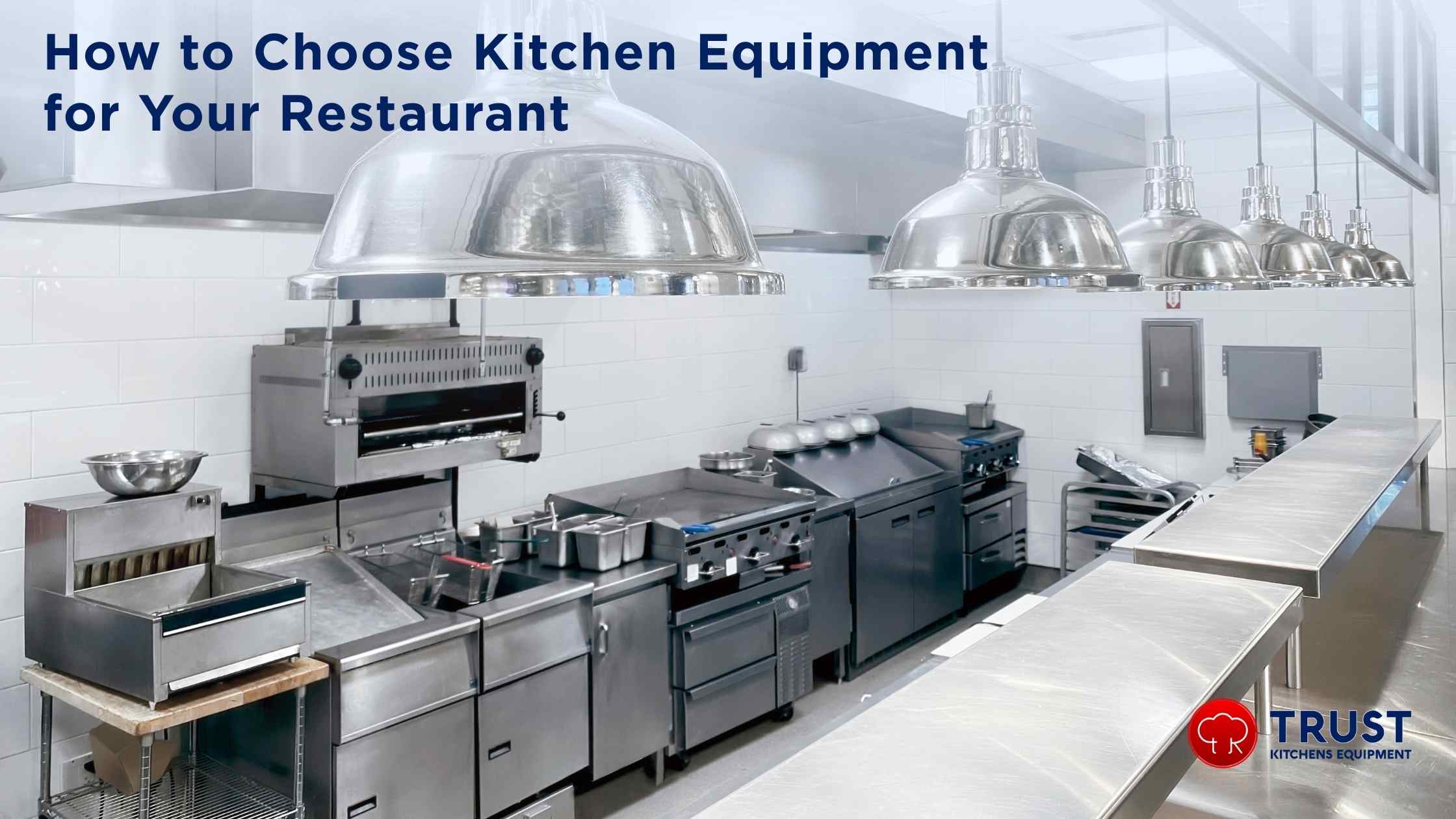
Choosing the right kitchen equipment for your restaurant comes down to three things: your menu requirements, your kitchen workflow, and your compliance needs. The smartest approach is to map every dish to the equipment it requires, then select durable, commercial-grade units that fit your space, power availability, and production volume. With a trusted supplier like Trust Kitchens Equipment Trading, you also reduce long-term risk through the right product selection, installation guidance, and reliable after-sales support.
Whether you’re opening a café, upgrading a live kitchen, or building a full production setup for delivery and dine-in, this guide will help you make informed, cost-effective choices that improve speed, hygiene, and consistency—without overspending on unnecessary equipment.
Quick summary for restaurant owners (UAE)
- Start from the menu: equipment must match cuisine and output volume.
- Prioritize workflow: layout decisions affect speed and labor cost.
- Choose commercial durability: restaurants need continuous-duty performance.
- Plan for compliance: hygiene-friendly stainless steel and easy cleaning matter.
- Work with a reliable supplier: selection + delivery + support reduces downtime.
What is the best way to choose kitchen equipment for a restaurant?
The best way to choose restaurant kitchen equipment is to follow a menu-to-machine approach: list every menu item, identify the equipment required to produce it consistently, then select models sized for your peak service hours. This prevents common mistakes like buying equipment that is too small (causing delays) or too large (wasting capital and space).
Use this 7-step checklist before buying
- Finalize menu + production style (fresh cooking, batch cooking, finishing station, cloud kitchen).
- Estimate peak hour output (covers/hour + delivery orders/hour).
- Map the workflow from receiving → storage → prep → cook → pass → wash.
- Measure available space with staff movement and safety clearance.
- Confirm utilities (gas line capacity, 3-phase/1-phase power, water, drainage, ventilation).
- Choose commercial-grade models with food-safe materials, serviceability, and warranty.
- Select a supplier with support for fast delivery and dependable spare-part channels.
Why menu planning is the foundation of equipment selection
Your menu determines your kitchen’s “equipment DNA.” A shawarma concept needs different core appliances than a bakery, and a steakhouse differs from a quick-service burger shop. When restaurants purchase equipment without menu clarity, they often end up with expensive machines that don’t contribute to daily production.
Menu-to-equipment mapping (examples)
- Biryani / grills: heavy-duty burners, stockpots, rice cookers, warming systems.
- Burgers / fast food: griddles, fryers, bun warmers, prep counters.
- Café: espresso machine, grinders, ice machines, display refrigerators.
- Bakery: convection ovens, planetary mixers, proofer, baking racks.
How to size your equipment for speed, not just capacity
In restaurant operations, the true performance metric is speed under peak load. Equipment that works well during slow hours may fail during Friday evening rush. Sizing equipment correctly ensures smooth ticket flow, consistent product quality, and fewer staff errors.
Key sizing factors to calculate
- Peak orders per hour (dine-in + takeaway + delivery combined)
- Batch cooking time (minutes per batch)
- Holding time (safe hot/cold holding time by food type)
- Recovery time (especially for fryers, refrigerators, ice machines)
Equipment sizing guide (simple reference)
| Equipment type | Sizing question | What good sizing prevents |
|---|---|---|
| Refrigeration | How much stock for 2–3 days? | Spoilage, cluttered prep area |
| Cooking line | How many orders per hour? | Ticket delays, staff panic |
| Food prep | How many portions daily? | Inconsistent cuts, wasted labor |
| Dishwashing | How many covers/shift? | Plate shortage, hygiene risks |
What kitchen zones should you plan before equipment buying?
Before purchasing even a single machine, restaurant owners should define kitchen zones. Proper zoning protects food safety, improves output, reduces staff collisions, and directly impacts customer service time.
Core zones in a professional kitchen
- Receiving zone: weighing, invoice check, initial inspection
- Dry storage: shelves, containers, pest-safe organization
- Cold storage: chillers, freezers, dairy/meat segregation
- Prep zone: cutting, washing, portioning
- Cooking zone: hot line appliances + ventilation
- Pass/dispatch: plating or packing
- Washing zone: dishwash sink, racks, drying
Where to buy reliable equipment for restaurants in UAE
If you’re searching online for restaurant kitchen equipment near me, the best answer is to choose a supplier that is local, established, and specialized in hospitality-grade supply—not a general electronics retailer. Restaurants in the UAE operate under high temperature conditions and high daily usage, so product quality and supplier support become critical.
Trust Kitchens Equipment Trading is built around this exact requirement: supplying durable commercial and home-kitchen equipment across Abu Dhabi and UAE-wide, from smaller startups to larger custom kitchen installations.
How Trust Kitchens Equipment Trading simplifies equipment selection
Choosing equipment isn’t just about “buying a machine.” It’s about building a system that keeps service fast, reduces waste, and prevents breakdowns. Trust Kitchens Equipment Trading supports restaurant owners with practical purchase guidance based on real kitchen needs—space, workflow, peak output, and long-term usability.
What makes Trust Kitchen a smart supplier partner
- Established in 2016 with a clear focus on kitchen and hospitality supply
- One-stop sourcing from small tools to full stainless-steel kitchen setups
- Fast delivery and service-first customer communication
- Support for entrepreneurs launching cafés, restaurants, bakeries, and food trucks
- Professional-grade product range suitable for heavy usage and hygiene requirements
Choosing the right supplier in Abu Dhabi: what to check
When comparing suppliers for kitchen equipment abu dhabi, don’t focus only on price. Focus on total cost of ownership: durability, energy efficiency, spare parts availability, and the supplier’s willingness to help you make the correct choices.
A supplier that understands commercial kitchen equipment abu dhabi requirements will guide you toward equipment that is realistically suited for your restaurant—especially regarding continuous-duty performance, easy-to-clean surfaces, and reliable cooling systems.
Supplier evaluation checklist
- Do they stock hospitality-grade equipment (not only household products)?
- Is product information transparent and detailed?
- Can they provide the right stainless-steel solutions for hygiene and long-term durability?
- Are delivery timelines realistic?
- Can they support equipment procurement end-to-end?
What equipment do restaurants need? (Category-wise essentials)
Restaurants need equipment across storage, prep, cooking, holding, serving, and cleaning. Buying only cooking appliances is a common error—your operational reliability depends just as much on refrigeration, prep tables, sinks, and hygienic storage.
1) Cold storage and refrigeration equipment
Refrigeration is where restaurants win or lose profitability. Poor refrigeration causes waste, inconsistent quality, and compliance risk.
- Reach-in refrigerators
- Undercounter chillers
- Freezers
- Prep counters with refrigerated compartments
- Display chillers (for cafés and bakeries)
For fast-paced kitchens, a 3 door worktop refrigerator is one of the best investments because it combines cold storage and a workable prep surface in the same footprint, improving speed and reducing movement.
2) Cooking line equipment
The cooking line should match your cuisine. In UAE kitchens, temperature, ventilation, and workload are crucial considerations.
- Heavy-duty burners
- Griddles / hot plates
- Deep fryers
- Charcoal grills (where concept requires)
- Ovens (convection or combination depending on menu)
3) Preparation and stainless steel workstations
Prep speed influences service speed. Stainless steel prep tables, sinks, shelving, and workstation setups improve hygiene and reduce contamination risks.
- Stainless-steel tables
- Vegetable washing sinks
- Wall shelves and racks
- Food-grade storage containers
4) Dishwashing and hygiene systems
Dishwashing is not a “back area”—it is a critical production system that keeps service running. When dishwashing fails, service fails.
- 3-compartment sinks (wash, rinse, sanitize)
- Drain boards and racks
- Grease traps (as required)
- Commercial dishwashers for high cover counts
How to choose café equipment without over-investing
Many café owners overspend by buying premium machines before confirming menu volume. The correct method is to choose café equipment based on drink mix (espresso vs iced beverages), expected customer flow, and available staff skills.
If you’re typing cafe equipment near me into Google, make sure you evaluate whether the supplier can provide both the main machines and the smaller essentials (knock boxes, milk jugs, tampers, blenders, ice bins, storage) that keep daily operations smooth.
Practical café equipment list
- Espresso machine + grinder(s)
- Blenders for frappes and smoothies
- Ice machine
- Display refrigeration for desserts and drinks
- Worktop refrigeration for milk and ingredients
Why total cost of ownership matters more than the lowest price
Low upfront cost can become expensive later due to breakdowns, poor performance, higher electricity use, and replacement cycles. Restaurants should treat equipment buying like a business investment, not a one-time purchase.
What to compare before buying equipment
- Energy efficiency: reduces monthly overhead
- Food safety design: easy-to-clean corners, stainless construction
- Spare parts accessibility: reduces downtime risk
- Warranty and service support: protects your investment
- Capacity and recovery time: protects peak-hour service
How a kitchen trading partner supports restaurant success
Professional restaurant owners don’t just purchase products—they build relationships with reliable vendors who understand hospitality operations. This is why choosing the right kitchen trading partner matters.
Trust Kitchens Equipment Trading operates as a practical procurement partner, supporting equipment selection that matches your business goals: faster service, consistent food quality, smoother workflow, and future scalability.
Where to source accessories and small wares in Abu Dhabi
Your restaurant’s performance is shaped by the “small” things too—knives, containers, ladles, shelves, food pans, and tools. These items improve consistency and reduce wastage and food handling errors.
If you’re looking for dependable kitchen supplies abu dhabi that suit both commercial standards and everyday operational durability, Trust Kitchen’s product range can help you equip your restaurant without shopping across multiple vendors.
Restaurant supply store vs general retailers: what’s the difference?
A specialized restaurant supply store focuses on equipment that is designed for continuous usage, hygiene standards, and high-output kitchen conditions. General retailers may stock similar-looking products that are not built for restaurant workloads.
Benefits of buying from a hospitality-focused supplier
- Commercial-grade build and performance
- Better selection for stainless-steel setups
- Products aligned with restaurant workflow needs
- Practical guidance for startups and expansions
Common mistakes to avoid when choosing restaurant kitchen equipment
Equipment mistakes are expensive because they affect daily operations and require replacement. Avoid these pitfalls by planning and buying based on workflow—not assumptions.
- Buying before finalizing the menu
- Ignoring ventilation and exhaust requirements
- Overloading electrical circuits
- Underestimating refrigeration capacity
- Skipping stainless steel where hygiene matters most
- Choosing based only on cheapest price
- Not planning service access space for maintenance and cleaning
How to plan equipment procurement for new restaurants (step-by-step)
A structured procurement plan prevents overspending and ensures you open on time with everything you need.
Step-by-step procurement plan
- Concept and menu lock: finalize cuisine, service style, and operating hours.
- Kitchen layout draft: define zones and staff movement paths.
- Equipment list creation: essential vs optional items.
- Budget plan: prioritize items that affect service speed and safety.
- Supplier shortlisting: choose a supplier with UAE delivery reach and support.
- Purchase + delivery scheduling: align with fit-out timeline.
- Installation + testing: verify performance before launch.
About Trust Kitchens Equipment Trading
Trust Kitchens Equipment Trading is a kitchen and hospitality equipment supplier based in Musaffah Industrial Area, Abu Dhabi, UAE. Established in 2016, the company specializes in stainless steel kitchen setups, restaurant and café equipment, bakery equipment, and professional-grade kitchenware—supporting both commercial ventures and premium home kitchens.
With a mission to help entrepreneurs and small businesses compete confidently in the UAE’s fast-growing hospitality industry, Trust Kitchen focuses on durable product sourcing, transparent pricing, fast delivery, and customer-first service—making it easier for restaurant owners to build kitchens that perform.
Explore products and categories online through the official storefront: Truststore.ae.
Frequently Asked Questions: How to Choose Kitchen Equipment for Your Restaurant
Start with the menu, then build your equipment list backward from production needs. The correct setup depends on your cuisine, volume, service style, and workflow (prep → cook → pass → wash).
Trust Kitchens Equipment Trading helps you create a practical equipment plan by matching your menu with the correct:
- Cooking line (range, griddle, fryer, ovens)
- Cold storage (reach-in chillers, freezers, undercounters)
- Food prep (tables, sinks, cutters, mixers)
- Hygiene and safety (hoods, suppression, handwash stations)
Tip: Avoid buying “oversized” equipment. Sizing to capacity saves on energy, maintenance, and space.
If you’re looking up restaurant kitchen equipment near me, don’t compare only by price. The most important checks are availability, warranty, spare parts, installation support, and after-sales service.
With Trust Kitchens Equipment Trading, you get guidance on:
- Correct sizing (capacity vs. daily cover count)
- Energy-efficient models
- Right materials (304 stainless steel vs alternatives)
- Reliable service support for restaurants
Buying nearby is helpful, but buying from a supplier that supports you after delivery is what protects your investment.
Many buyers use kitchen equipment abu dhabi as a broad term, but in restaurants you specifically need commercial-grade equipment that’s designed to run for long hours and withstand high-volume service.
Commercial equipment typically offers:
- Heavier-duty compressors, burners, and motors
- Stronger insulation and better cooling recovery
- Food-safe construction and serviceable components
- More reliable temperature control for compliance
Trust Kitchens Equipment Trading focuses on selecting equipment that’s built for the realities of daily restaurant operations.
When you purchase commercial kitchen equipment abu dhabi, you’re not just buying products—you’re building a working kitchen system. Specialists help you avoid layout mistakes, wrong capacities, and poor ventilation planning.
Trust Kitchens Equipment Trading supports restaurants with:
- Equipment selection aligned to menu + volume
- Kitchen layout guidance for workflow efficiency
- Supply of cooking, refrigeration, stainless steel fabrication, and dishwashing equipment
- Coordination for installation and operational readiness
When planning kitchen supplies abu dhabi, prioritize items that directly impact hygiene, storage, and output. Many new restaurants overspend on non-essentials early and miss core operational tools.
Priority checklist:
- Food storage containers, GN pans, shelving
- Prep tools: knives, boards, scales, thermometers
- Cleaning tools: scrubbers, squeegees, chemical dilution
- Service support: trays, ladles, tongs, portion tools
Trust Kitchens Equipment Trading can bundle essentials with major equipment purchases so you open faster and more efficiently.
Yes—when configured correctly, a 3 door worktop refrigerator is one of the best space-saving refrigeration choices for restaurants. It combines cold storage with a usable prep surface, helping reduce steps and speed up service.
It’s ideal for:
- Prep stations (salads, sandwiches, pizzas, grills)
- Line operations needing quick ingredient access
- Kitchens with limited floor space
Trust Kitchens Equipment Trading can recommend the right capacity and compressor specifications based on your kitchen temperature and service volume.
If you’re searching cafe equipment near me, focus on what directly affects customer experience: coffee quality, speed, and consistent chilled storage (milk, desserts, beverages).
A smart café starter set includes:
- Espresso machine + grinder
- Blender for cold drinks
- Undercounter chiller or compact display chiller
- Prep counter + sink + hygiene stations
Trust Kitchens Equipment Trading helps cafés select durable equipment with reliable support—so you don’t lose sales due to breakdowns.
In the hospitality industry, kitchen trading typically includes sourcing, supplying, and coordinating equipment needed to build a complete operational kitchen—often including layout guidance, fabrication, and installation support.
Trust Kitchens Equipment Trading offers a complete sourcing solution so restaurant owners can:
- Reduce vendor fragmentation (one project-aligned supply partner)
- Ensure equipment compatibility (electrical, gas, drainage, ventilation)
- Scale correctly for current and future capacity
A restaurant supply store is excellent for consumables and smaller items, but for core assets like cooking equipment, refrigeration, fabrication, and ventilation, a specialized supplier is usually the safer long-term option.
Trust Kitchens Equipment Trading helps restaurant owners avoid common purchasing mistakes like:
- Buying incorrect sizes that don’t match output
- Choosing equipment without local service support
- Missing essential accessories and installation requirements
Best practice: Combine both. Use a restaurant supply store for day-to-day items, and a commercial supplier for mission-critical equipment.

 Home
Home
 Categories
 Orders
 Wishlist
 Profile
